From Bedroom Recordings to Professional Sound: Skills Every Home Producer Should Master
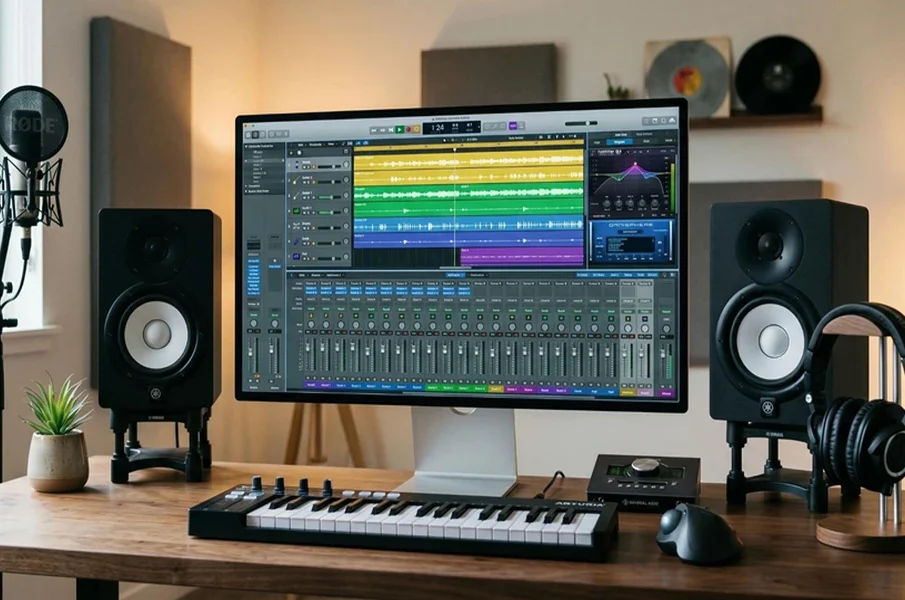
Creating music at home has become increasingly accessible, but producing recordings that sound polished and professional requires more than a microphone and recording software. The difference between a rough demo and a well-produced track often comes down to technical knowledge, careful listening, and consistent recording practices.
For aspiring music producers, understanding the fundamentals of audio engineering can improve recording quality without requiring an expensive studio setup. From managing room acoustics to developing effective mixing habits, several practical skills can help turn a basic home studio into a more capable creative environment.
Understand How Your Recording Space Affects Sound
One of the most overlooked aspects of home recording is the room itself. Even high-quality microphones can capture unwanted reflections, background noise, and uneven frequency responses when placed in an unsuitable environment.
Hard surfaces such as bare walls, windows, and floors reflect sound. These reflections can interfere with the direct sound reaching a microphone, potentially making recordings sound hollow, harsh, or unclear.
Improving room acoustics does not necessarily require a complete renovation. Simple adjustments can make a noticeable difference.
Start by positioning microphones away from reflective surfaces. Consider adding suitable acoustic absorption around critical recording areas and reducing unwanted noise from fans, appliances, and nearby equipment.
It is also important to distinguish acoustic treatment from soundproofing. Acoustic treatment manages how sound behaves inside a room, while soundproofing focuses on limiting sound transmission between spaces.
Understanding this distinction helps producers invest in improvements that address their actual recording problems.
Master Microphone Placement and Gain Staging
A good recording begins with capturing a clean, balanced signal. Microphone positioning and gain staging are two foundational skills that every home producer should develop.
Microphone placement affects tonal balance, clarity, and the amount of room sound captured. Moving a microphone closer to an instrument may emphasize certain frequencies, while increasing the distance can introduce more of the surrounding room’s character.
Experimenting with microphone angles and distances can reveal substantial differences without changing any equipment.
Gain staging is equally important. Setting recording levels too high may introduce digital clipping, while excessively low levels can make it harder to achieve a usable recording.
Instead of aiming for the loudest possible signal, producers should maintain sufficient headroom and monitor input levels throughout the session.
Recording several short test passages before starting a full performance can prevent avoidable technical problems later.
Build Your Technical Knowledge Beyond Tutorials
Online tutorials are useful for learning individual techniques, but understanding how those techniques work together is essential for developing reliable production skills.
Audio engineering involves interconnected processes, including signal flow, microphone selection, recording, editing, mixing, and mastering. A decision made during recording can influence every subsequent production stage.
For example, excessive room reflections captured during vocal recording may be difficult to correct during mixing. Similarly, poor gain management can create problems that equalization or compression cannot fully resolve.
Aspiring producers who want to understand these relationships more systematically may benefit from exploring a studio recording degree course that covers recording techniques, audio production workflows, and the technical principles behind professional studio practices.
Formal education is one possible learning path rather than a replacement for independent experimentation. Practical projects, critical listening, and consistent feedback remain important regardless of how someone learns.
The objective is to develop enough technical understanding to make deliberate recording decisions instead of relying entirely on presets or trial and error.
Develop a Consistent Mixing Workflow
Mixing is where individual recordings are shaped into a cohesive musical presentation. Although modern recording software offers extensive processing options, effective mixing usually begins with organization and careful listening.
Before adding effects, arrange tracks logically, label channels clearly, and remove unnecessary audio regions.
Start by adjusting volume levels and stereo positioning. These basic decisions establish the relationship between vocals, instruments, and other musical elements.
Once the initial balance feels appropriate, consider whether equalization or dynamic processing is necessary.
Equalization can help reduce unwanted frequency buildup or improve separation between instruments. Compression can help control variations in dynamic range when used appropriately.
However, excessive processing can remove the natural character of a performance.
Regularly compare the processed mix with the original recording. Listening at moderate levels and checking the mix through different playback systems can also reveal issues that are easy to miss during long sessions.
A repeatable workflow allows producers to focus more attention on musical choices and less on technical confusion.
Learn to Listen Critically and Evaluate Your Recordings
Technical skills become more valuable when producers develop the ability to recognize what their recordings actually need.
Critical listening involves identifying specific characteristics rather than simply deciding whether something sounds good or bad.
For example, a vocal may lack clarity because of microphone positioning, competing instruments, or excessive reverberation. Each issue requires a different solution.
Reference tracks can provide useful context when evaluating tonal balance, stereo width, dynamics, and overall presentation. Choose professionally produced recordings with instrumentation and stylistic characteristics similar to your project.
When comparing recordings, pay attention to differences in playback loudness. A louder track can seem more impressive even when its overall balance is not better.
Taking occasional listening breaks also helps reduce fatigue and encourages more objective decisions.
Producers can accelerate their development by keeping notes about recording settings, microphone positions, processing choices, and the results of each session.
Over time, these observations can reveal which techniques consistently improve their work.
Conclusion
Producing professional-sounding music at home depends less on owning expensive equipment and more on understanding how recording decisions influence the finished result.
Room acoustics, microphone placement, gain staging, signal flow, mixing, and critical listening are interconnected skills that improve with practice.
Rather than trying to master every production technique simultaneously, focus on developing one skill at a time and applying it to real recording projects.
A thoughtful approach to learning, experimentation, and self-evaluation can help home producers create cleaner recordings, make more confident technical decisions, and develop a recognizable production style.

Leave a reply
-
From Bedroom Recordings to Professional Sound: Skills Every Home Producer Should Master
Creating music at home has become increasingly accessible, but producing recordings that ... -
-
-