How to Tell If Your Air Handler Is Quietly Failing
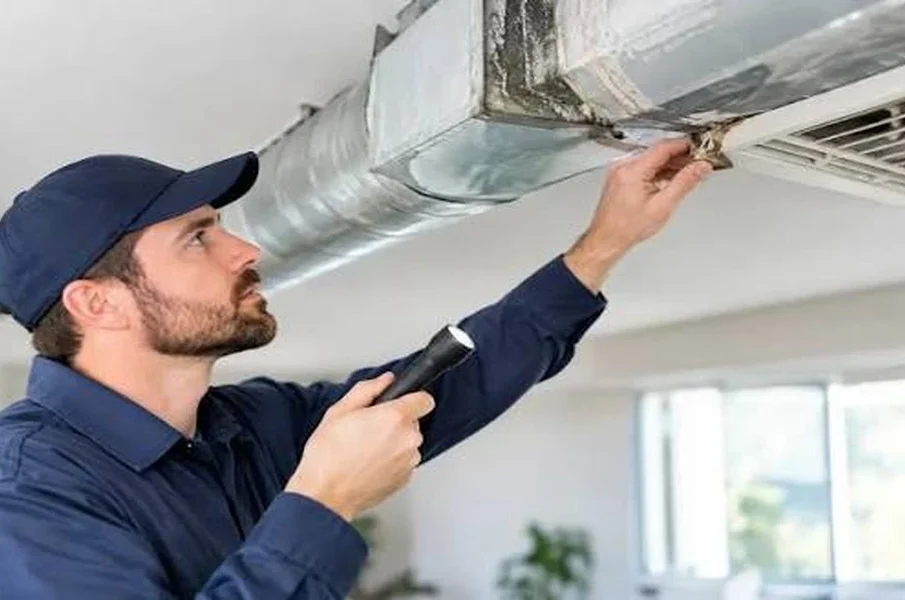
Your air handler is the one piece of HVAC equipment you almost never see, and that’s exactly why it’s so easy to ignore. It sits in the attic, closet, or basement, pushing conditioned air through your ducts while you go about your day. When it starts to fail, it usually doesn’t announce itself with a bang. It just gets a little louder, a little weaker, or a little less cold, and you write it off as the weather.
I’ve walked through enough New England homes to know the pattern. The homeowner notices the upstairs bedroom isn’t cooling like it used to, shrugs it off for a season, and then calls when the blower finally seizes up in August. You can catch the problem months earlier if you know what to look and listen for. For households that would rather hand the whole thing to a pro from the start, air handler maintenance and repair services cover the inspection, cleaning, and component work that keeps the unit running through both heating and cooling season.
This guide gives you a simple way to self-diagnose the common symptoms, tells you what to check before you call anyone, and lays out the signs that should push you to pick up the phone today rather than next month.
What the air handler actually does
The air handler houses the blower fan, the evaporator coil, the filter rack, and often the electric heat strips or a hydronic coil. In a split system, the outdoor condenser handles the refrigerant, and the indoor handler pushes air across the coil so it reaches your rooms at the right temperature.
That means almost every comfort complaint in a house traces back to one of a handful of components inside that box. Weak airflow, uneven temperatures, strange noises, and higher-than-normal electric bills all point to the same small group of parts. Diagnosing the symptom correctly is half the repair.
The STACK test: five checks you can run in an afternoon
I use a simple framework for sorting air handler complaints into what a homeowner can rule out and what requires a technician. I call it STACK, and it takes about an hour of your time. It won’t fix anything, but it will tell you exactly what you’re dealing with before someone quotes you a price.
| Letter | Check | What it tells you |
|---|---|---|
| S | Sound | Rattles, squeals, or grinding point to loose panels, a worn belt, or failing bearings. |
| T | Temperature | Measure supply air at a vent versus return. A small gap signals a coil or refrigerant problem. |
| A | Airflow | Hold a tissue to a supply register. Weak or uneven flow means a blocked filter, duct leak, or failing blower. |
| C | Condensate | Check the drain pan and line for standing water or algae clogs. |
| K | Kondition of the filter | A gray, matted filter chokes the blower and forces it to work harder than it should. |
Run these in order. Sound first, because it’s the fastest, and the filter last, because you’ll want to swap it anyway. If three or more checks come back wrong, you’ve got a real problem and not a fluke.
Why a squealing blower is worse than a rattling panel
Noise is the symptom homeowners misread most often. A rattle usually means a loose access panel or a vibration in the ductwork, and it’s annoying but rarely urgent. A squeal or a grind is a different animal entirely.
Those sounds typically come from the blower motor bearings or a worn belt on older belt-driven units. Let that ride and the motor can seize, which means a full replacement instead of a bearing service. That’s the moment I’d tell a friend to call. A rattle can wait until Monday. A grind shouldn’t wait until morning.
Frozen coil, wet floor, or both
If you see ice on the refrigerant lines or the coil itself, stop running the system. Ice forms when airflow drops or refrigerant charge is low, and continuing to run it can send liquid refrigerant back to the compressor. That’s the most expensive thing in the system, so treat icing as a red flag, not a curiosity.
Water on the floor is the other classic clue. The condensate drain clogs with algae and dust over time, the pan overflows, and the ceiling below the attic unit pays the price. According to the Department of Energy, heating and cooling account for a majority of a typical home’s energy use, so a unit struggling against a blocked drain or iced coil is also quietly running up your bill.
Clear the drain line with a wet-dry vacuum if you can reach the trap safely. If water has been sitting for a while, call a technician before mold starts in the pan or the ceiling stains spread.
When to call a pro instead of poking around
Some jobs are homeowner territory. Changing the filter, straightening a bent panel, and clearing a visible drain clog are all fair game. Others aren’t, and here’s the line I’d draw: anything that involves opening the electrical compartment, touching refrigerant, or removing the blower assembly.
- You see ice on the coil or refrigerant lines.
- The blower hums but the fan won’t spin.
- You smell burning or a hot electrical odor near the unit.
- Water is actively dripping from the unit or the ceiling below it.
- The system trips the breaker repeatedly.
Electric heat strips especially shouldn’t be handled by anyone without the right testing tools and a working knowledge of the wiring. The Environmental Protection Agency notes that refrigerant handling falls under specific certification rules, which is one more reason to leave that part alone. Diagnose what you can, then hand off.
A quick filter routine that prevents most of it
Most air handler failures trace back to airflow restriction, and most airflow restriction traces back to a dirty filter. The fix costs you a few dollars a month and a couple of minutes. Check the filter every thirty days during heavy heating or cooling season, and replace it when it’s visibly gray or you can’t see light through it.
Watch your filter size, too. A filter that’s too small lets dust bypass the frame and coat the coil, and a filter that’s too dense chokes the blower. The National Institute of Standards and Technology publishes airflow and filtration guidance that explains why matching the filter to the unit matters more than buying the most restrictive one on the shelf. My stance: buy the right size and change it often rather than buying the fanciest filter and leaving it in for a year. The cheap filter swapped on schedule beats the expensive one that’s been matted shut since spring.
What a technician will actually check
A real inspection goes beyond a filter change. Expect the tech to measure static pressure across the blower, check the amp draw on the motor, inspect the coil for dirt and ice, test the condensate pump and drain, and confirm the heat strips and controls are cycling correctly. Ask them to show you the readings rather than just telling you the unit is “running fine.”
If they recommend a part replacement, ask why, and ask what happens if you wait. A good tech will give you a straight answer. A vague one is a reason to get a second opinion.
The takeaway
The air handler is a quiet machine, and quiet machines fail quietly. Run the STACK checks twice a year, keep the filter clean, and treat ice, water, and grinding noises as calls to action rather than background details. Your system will last longer, your electric bill will thank you, and you won’t be the homeowner calling on the hottest day of the year when every technician in the state is booked solid. Next time your upstairs rooms feel warm, put your hand near a register and listen. What do you hear?

Leave a reply
-
4 Ways To Protect Teeth With Developmental Enamel Defects
You may have noticed chalky white spots, yellow or brown patches, or ... -
-
-