How Vehicle Wraps Turn Your Work Truck Into a Moving Billboard
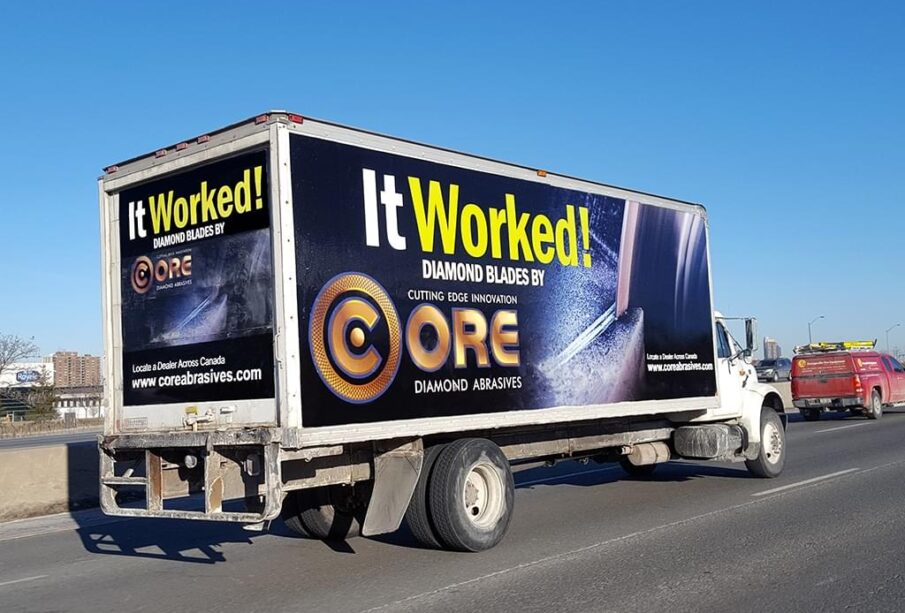
Your work truck drives your service area every single day, and right now it’s probably doing absolutely nothing for your marketing. That’s thousands of eyeballs per week seeing a plain white panel van and forgetting it instantly. A vinyl wrap changes that math in a way almost no other advertising format can match.
This piece breaks down why wrapped vehicles outperform most traditional ad buys on a cost-per-impression basis, what makes a wrap design actually work on the road, and how to think about the investment before you pull the trigger. No fluff, just what you need to know to make a smart decision.
The Impression Numbers Are Genuinely Hard to Ignore
Most small business owners think of vehicle wraps as a nice-to-have. The data says they’re leaving serious reach on the table by skipping them.
In a survey cited by 3M, 64% of respondents said they noticed vehicle graphics. That same body of research shows vehicle advertising generates 30,000 to 70,000 daily impressions per vehicle, and online ads can cost up to $21 per thousand impressions while fleet graphics can cost as little as $0.15 per thousand impressions.
Run those numbers for a minute. A plumber running four service calls a day in the same metro area is generating a concentrated local audience that keeps seeing the same brand. That’s not a one-time billboard; it’s a repeating signal to the exact neighborhoods the business already serves. The geographic targeting happens automatically, because the truck is already going there.
A joint report by the Outdoor Advertising Association of America (OAAA) and Nielsen found that wrapped vehicles ranked as the number one most noticed moving format of out-of-home advertising, and the second most noticed form of outdoor advertising overall.
That’s a meaningful distinction. Billboards sit still. Your truck moves through school pickup lines, hardware store parking lots, and busy intersections, all within your own market.
What the “Impression Stack” Framework Actually Means for Local Businesses
Here’s a framework worth keeping in mind when you’re evaluating the ROI: think of your wrap as building an Impression Stack over its lifespan. Every day the vehicle is on the road, it layers another round of exposures on top of yesterday’s. Unlike a social media post that decays within hours or a radio spot that runs once, a wrap keeps stacking.
Consider a concrete scenario. An HVAC company in a mid-size metro puts a full wrap on its two service vans. Both vans cover 80 miles of city driving on a typical weekday. By the end of the first month, those two vehicles have generated a combined total of impressions in the low millions, concentrated in the zip codes where the company already has customers and wants more. The technicians aren’t doing anything differently; the marketing is just riding along.
That compounding effect is why wrap ROI tends to accelerate over time rather than plateau. A wrap is a one-time investment, and premium wrap materials are rated for five to seven years under normal conditions, which means a single purchase generates impressions for half a decade or more.
If you’re budgeting for paid search or social ads, you already understand that you pay month after month for the same eyeballs. A wrap flips that model entirely.
Design Choices That Separate a Wrap That Works From One That Doesn’t
Not every wrap is created equal. A cluttered design with four phone numbers and twelve bullet points about your service offerings is not a vehicle wrap; it’s a moving stress test for the human eye. You have roughly two seconds of attention as someone passes you on the road. Design for that window, not for the brochure you hand out at trade shows.
The elements that actually convert impressions into recalled brand names are simpler than most owners expect:
- One dominant color: Pick a hue that contrasts sharply with road environment (white vehicles on gray highways disappear; a bright blue or branded green does not).
- Logo at maximum readable size: If someone can’t read it from a car two lanes over, it’s too small.
- A single call to action: Phone number or URL, not both. Pick whichever one your customers actually use.
- No paragraph text: Body copy belongs on your website, not your hood.
Full wraps are the most visible, but partial wraps on the rear doors and tailgate can hit a sweet point between cost and coverage, especially for vehicles that spend a lot of time parked at job sites where foot traffic sees the back of the truck more than the sides.
How Vehicle Wrap Costs Compare to Other Ad Formats
The advertising industry measures reach efficiency using cost per thousand impressions, commonly called CPM. Here’s how vehicle graphics stack up against the formats most local businesses are already using:
| Ad Format | Average CPM | Recurring Cost? |
|---|---|---|
| Vehicle Wrap / Fleet Graphics | $0.48 | No (one-time install) |
| Billboard (outdoor) | $3.56 | Yes (monthly rental) |
| Transit Advertising | $7.45 | Yes (campaign-based) |
| Online Display Ads | Up to $21.00 | Yes (daily spend) |
CPM figures sourced from OAAA data as cited by lookupaplate.com (2025) and 3M fleet graphics research.
The numbers make the case plainly. No other format delivers impressions at that price, and none of the others appreciate in value the longer you run them. A wrap is the one ad buy that gets cheaper per impression every single day it stays on the truck.
The Market Is Moving Fast. That’s Relevant for Timing
Vehicle wraps aren’t a niche product anymore. According to Grand View Research, the U.S. automotive wrap films market was valued at $1,496.2 million in 2024 and is projected to grow at a CAGR of 18.8% from 2025 to 2030, driven by the rising trend of advertising on automobiles and growing popularity of automotive wrap films for vehicle customization.
That growth rate matters for a practical reason: as more businesses in your category wrap their fleets, the ones that haven’t will start to look distinctly less professional by comparison. A branded competitor van parked next to your plain white truck at the same job site is not a great visual for your business. The window to be an early adopter in most mid-size markets is still open, but it won’t stay that way.
You can read the full market analysis directly from Grand View Research’s 2025 U.S. automotive wrap films market press release, which also covers material and application segment breakdowns for anyone thinking about wrap specs.
How to Pick the Right Installer (And Why It Matters More Than the Design)
A great design applied badly is worse than a mediocre design applied well. Bubbles, lifted edges, and misaligned seams don’t just look unprofessional; they peel faster and can damage paint if they’re removed incorrectly. The installer matters.
Here’s a practical checklist before you commit:
- Ask to see in-person examples of completed work, not just portfolio photos. Photos can hide edges.
- Confirm they use cast vinyl, not calendered vinyl. Cast film conforms to curves and lasts significantly longer on complex body panels.
- Ask about warranty coverage on both the material and the installation labor separately.
- Find out whether they handle design in-house or outsource it. In-house design means faster revisions when you want changes.
- Check that the shop has a climate-controlled installation bay. Temperature and humidity during application directly affect adhesion and longevity.
For businesses in southwest Michigan, shops that offer vinyl graphics in Kalamazoo, MI with in-house design and installation under one roof tend to produce more consistent results than jobs where the design, printing, and install are split across different vendors who’ve never met in person.
3M’s own fleet graphics resource reinforces this: unlike other marketing mediums, vehicle graphics aren’t subject to ad blockers, commercial-free streaming, or other barriers that prevent brands from communicating with potential customers. That’s a permanent feature of the format, not a trend that reverses when a platform changes its algorithm.
So the real question isn’t whether a wrap is worth it. The numbers settled that. The question is how much longer your truck is going to spend on the road doing absolutely nothing for your brand.

Leave a reply
-
What Pet Owners Should Know About Quality Of Life Assessments
You may be watching your pet do small things differently and wondering ... -
-
-