Hydro Jetting vs Snaking: Which One Actually Clears a Stubborn Drain
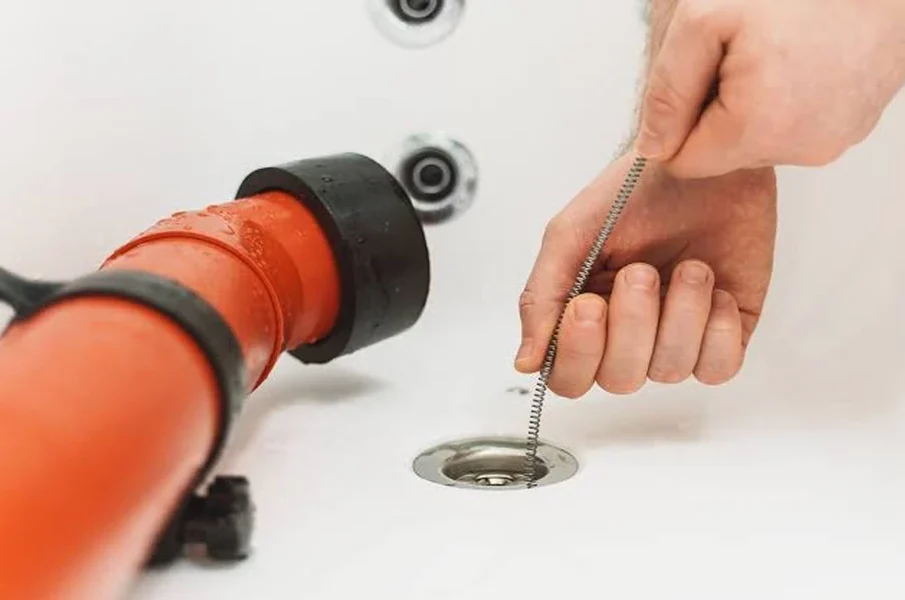
You’ve snaked the same kitchen drain three times this year. It clears, it backs up two weeks later, and you’re out another Saturday morning with a rented auger. That pattern almost always means the auger was never the right tool. It punched a hole through the clog, water drained, problem “solved.” The grease, soap scum, and mineral scale that built up on the pipe wall stayed put and started trapping debris again the moment you turned the faucet on.
That gap between clearing a clog and cleaning a pipe is the whole conversation. A drain snake and a hydro jetting machine do genuinely different jobs, and picking the wrong one is why you keep paying for the same visit twice. Plumbers who offer pipe cleaning in Jacksonville, FL will usually tell you up front which service fits your line, and the good ones explain why before they touch a thing.
What a snake actually does to your pipe
A drain snake, properly called a cable auger, is a flexible steel cable with a cutting head. It breaks up or pulls back a single obstruction. That’s it. It’s the right answer for a solid plug in a trap or a short run of pipe: a wad of hair, a swallowed toy, a soap bar wedged somewhere it shouldn’t be.
What it won’t do is touch the film of buildup clinging to the pipe walls. And that film is what turns a one-time clog into a quarterly one. I’ve watched a kitchen line get augered every six weeks for two years before anyone put a camera in it, and the pipe interior was narrowed to roughly the width of a pencil by grease. No cable on earth fixes that.
So how is hydro jetting different?
Hydro jetting uses pressurized water, not steel, to scour the inside of the line. A specialized nozzle goes in, fires jets backward and forward, and washes the pipe walls down to bare material while pushing the loosened gunk toward the main.
The key word is scouring. It doesn’t punch a hole and hope. It restores the pipe’s full internal diameter, which is why jetting fix a recurring clog that snaking keeps “solving.” The tradeoff is real: jetting needs access, it needs a drain line in decent structural shape, and a pro has to confirm the pipe can take the pressure before sending water through it. That’s not a service to DIY with a pressure washer wand and optimism.
| Factor | Drain snake | Hydro jetting |
|---|---|---|
| What it removes | A single solid clog | Clogs plus wall buildup, grease, scale |
| Pipe wall after | Unchanged, film stays | Scoured down to bare material |
| Best for | Quick blockage in a short run | Recurring clogs, slow drains, root intrusion |
| Needs camera check first | No | Yes, on older or fragile lines |
| Typical use | Emergency stopgap | Preventive and corrective cleaning |
The Clog Autopsy: read your drain before you call anyone
Here’s the framework I use, and it works whether you’re in a 1950s bungalow or a newer build with cast iron under the slab. Before you book a service, run what I call a Clog Autopsy. It’s four questions, and your answers point to the tool.
- How often does it come back? Once and never again suggests a foreign object. Three times in six months suggests buildup or roots.
- Which fixtures suffer? One sink alone points to the branch line serving it. Multiple drains across the house points to the main.
- Is the backup slow or sudden? Gradual decline over weeks reads as scale and grease. A sudden stop smells like a collapsed section or a heavy root mass.
- Does it gurgle or smell? Gurgling after flushing and a sulfur smell usually mean venting issues or a partially blocked main, not local slime.
Answer those honestly and you’ll walk into the conversation already knowing whether you’re chasing a stopped drain or a dirty one. That saves you from paying for a cable job that was never going to hold.
The 1-5-15 rule for choosing a service
I made this one up after too many “it’s clogged again” calls, so take it as practical guidance rather than gospel. It’s a simple way to decide without second-guessing yourself.
- One clog in a single fixture, no prior history: reach for the snake or a manual plunger first. It’s cheap, fast, and often the entire fix.
- Five feet of line involved, or a clog that clears then returns within about a month: get a camera inspection. You can’t choose a tool until you’ve actually looked at the pipe. This is the step most homeowners skip, and it’s the one that ends the guessing.
- Fifteen minutes of a professional jetting pass is what it takes on a typical residential line once the diagnosis is clear. That single pass cleans the walls, and for most recurring clogs it converts a twice-a-year headache into a once-a-decade maintenance item.
Where roots and old pipes change the calculus
Tree roots are their own problem. A cable with a cutting head can shear roots inside the line, but it leaves the root ends behind, and those regrow into the same seam. Jetting won’t cut roots either, but the camera-first approach matters more here than anywhere else, because you need to know whether the pipe is cracked before you add pressure to it.
It’s also worth knowing what’s actually going down your drains. Municipal wastewater systems are built to handle water, bodily waste, and toilet paper, and utility guidance from the EPA is clear that grease, wipes, and heavy solids belong in the trash. If you’re cooking with a lot of oil, your kitchen line is going to build a film no matter how often you snake it.
Older homes add a wrinkle. Cast iron, galvanized steel, and clay lines can be decades old and already half-eaten by corrosion. Age is a real factor here: national housing data from the U.S. Census Bureau reminds us that a large share of the housing stock predates modern plastic plumbing. If your home was built before the 1980s, insist on a camera check before a high-pressure pass. A pipe that’s about to fail needs lining or replacement, and blasting water through it first just speeds up the inevitable.
A quick checklist before you book
Get three answers from whoever shows up, and don’t hand over a card until you have them.
- Will you camera the line and show me the footage before recommending a service?
- Are you checking whether jetting is even safe for this pipe material and condition?
- If I have recurring clogs, what’s your plan to stop the loop, not just clear today’s backup?
Any reputable outfit will answer all three without flinching. If someone jumps straight to a cable without looking and won’t tell you why, that’s your sign to keep calling. A full jetting job also isn’t a magic bullet for a pipe that’s structurally finished. A good contractor will tell you straight when cleaning is wasted effort and replacement is the honest answer. Reputable trade coverage like HGTV tends to frame it the same way: diagnose first, service second.
Bottom line
A snake stops a clog. A jetter cleans a pipe, and those aren’t the same thing. If you’ve paid for the same drain to be cleared more than twice in a year, stop reaching for the auger and get the line inspected.
That one camera appointment tells you which service you actually need, and it usually costs far less than another round of temporary fixes. When the same drain keeps coming back, the smart money says the pipe, not the clog, is the real problem. Next time it backs up, ask one question before you dial: did the last visit actually clean the walls, or just poke a hole through the mess?

Leave a reply
-
4 Ways To Protect Teeth With Developmental Enamel Defects
You may have noticed chalky white spots, yellow or brown patches, or ... -
-
-